
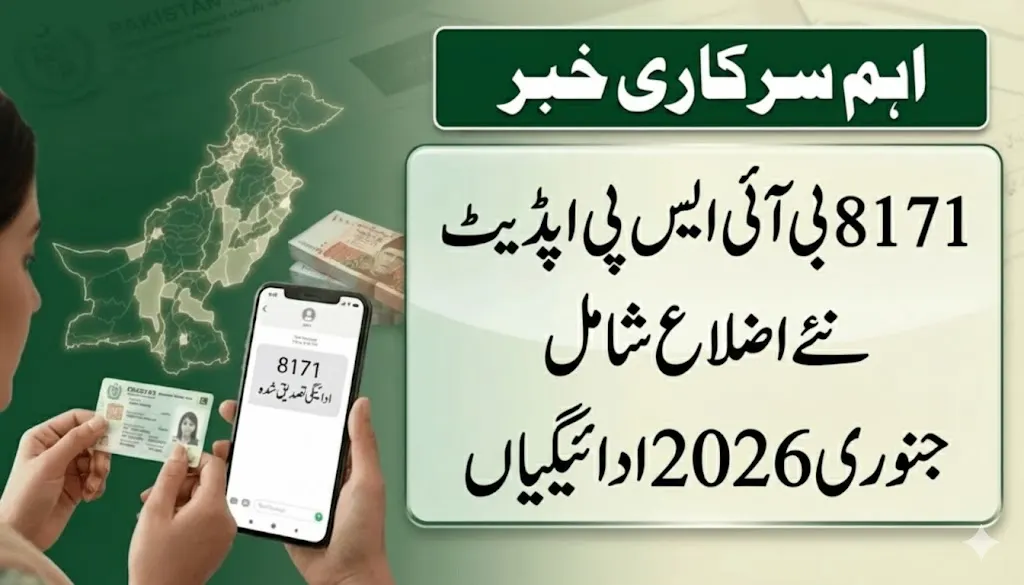
The Benazir Income Support Programme has announced a significant expansion of its 8171 payment system for January 2026, incorporating additional districts across Pakistan into the quarterly disbursement cycle. This strategic expansion enables thousands of previously excluded eligible families to access the Rs. 13,500 Kafalat assistance payment, providing crucial financial relief during a period of persistent inflation and economic pressure on low-income households.
The district additions represent Phase 2 and Phase 3 payment rollout targeting rural and economically disadvantaged regions where poverty rates are highest and formal employment opportunities remain severely limited. For beneficiaries who completed registration and received eligibility confirmation but couldn’t collect payments due to district-level payment schedule limitations, this update finally opens access to entitled assistance.
For comprehensive information on BISP and other welfare programs, visit 8171 Check Online CNIC – your trusted resource for verified government program updates.
Understanding the January 2026 District Expansion
BISP operates through phased payment disbursement across Pakistan’s districts to manage operational logistics, prevent overcrowding at payment centers, ensure adequate cash availability at distribution points, and enable quality control and monitoring across the massive program serving over 9 million families nationwide.
The January 2026 expansion specifically addresses gaps where eligible families in certain districts completed all registration and verification requirements but faced delays in payment activation due to their district not being included in initial payment phases.
Strategic Expansion Focus
The newly added districts share common characteristics that influenced their inclusion timing:
Rural and Remote Geography: Many added districts feature dispersed populations, challenging terrain, and limited infrastructure that complicated earlier payment system establishment.
High Poverty Concentration: These districts typically show poverty rates significantly above national averages, indicating acute need for social protection interventions.
Underdeveloped Banking Infrastructure: Limited formal banking penetration in these areas required additional preparation to establish alternative payment mechanisms through agents and mobile points.
Previous Payment Access Challenges: Some districts faced recurring operational difficulties in earlier cycles, necessitating system improvements before broader rollout.
Read Also: 8171 BISP Registration 2026 – Complete Guide for First-Time Applicants
Complete List of Newly Added Districts – January 2026
The following districts across all provinces and regions now join the active BISP 8171 payment system for January 2026 and subsequent disbursement cycles.
Punjab Province – New Districts
Jhang District: Located in central Punjab with significant rural population, Jhang’s agricultural economy has struggled with crop price volatility and water scarcity affecting farmer livelihoods. The district’s inclusion brings payment access to thousands of rural women whose families depend on seasonal agricultural income.
Hafizabad District: Situated between Gujranwala and Faisalabad, Hafizabad combines industrial zones with agricultural areas. Despite industrial presence, large segments of the population work in informal sectors with unstable incomes qualifying them for BISP support.
Kasur District: Bordering India with mixed urban-rural demographics, Kasur has substantial low-income populations in both urban slums and rural agricultural areas. The district’s inclusion addresses long-standing payment access gaps.
Lodhran District: Among Punjab’s less developed districts with economy heavily dependent on cotton farming, Lodhran faces periodic agricultural crises that push families into poverty. BISP support provides crucial income stability for vulnerable households.
Sindh Province – New Districts
Badin District: Coastal district facing unique challenges from salinity affecting agriculture, fishing community vulnerabilities, and limited economic diversification. Women-headed households are particularly numerous due to male migration patterns.
Tando Allahyar District: Agricultural district where land ownership concentration leaves many families as landless laborers with irregular incomes. The district’s inclusion extends financial protection to this vulnerable segment.
Thatta District: Historic district with significant poverty due to limited economic opportunities, climate vulnerability affecting traditional livelihoods, and infrastructure deficits. BISP payments provide essential support for families lacking alternative income security.
Khyber Pakhtunkhwa Province – New Districts
Swabi District: Densely populated district with limited industrial base and high unemployment despite proximity to Peshawar. Large numbers of male workers seek employment abroad, leaving women-headed households managing families on irregular remittances.
Shangla District: Mountainous district with difficult terrain, limited connectivity, and subsistence agriculture defining most livelihoods. The district’s inclusion represents BISP’s commitment to reaching Pakistan’s most remote populations.
Kohistan District: Among Pakistan’s most geographically challenging districts with extreme poverty, minimal infrastructure, and populations heavily dependent on seasonal work. Establishing payment systems here required innovative approaches to reach scattered communities.
Balochistan Province – New Districts
Mastung District: District with pastoral and agricultural mixed economy where drought cycles create severe economic stress. Security challenges in the region complicated earlier payment system establishment.
Nushki District: Remote district with sparse population, extreme climate conditions, and limited economic base. The district’s inclusion demonstrates expanding payment system reach into Balochistan’s most underserved areas.
Awaran District: One of Pakistan’s least developed districts with minimal infrastructure and extreme poverty rates. Establishing functional payment systems required substantial groundwork and community engagement.
Gilgit-Baltistan and Azad Jammu & Kashmir – New Areas
Skardu District (GB): High-altitude district where harsh winters limit economic activity several months annually. Tourism provides some income but remains seasonal and concentrated in specific areas, leaving many families vulnerable.
Muzaffarabad District (AJK): Capital district of AJK with significant populations displaced by natural disasters and ongoing recovery from earthquake impacts. BISP support strengthens resilience for families still rebuilding livelihoods.
Updated Eligibility Criteria for BISP 8171 Payments
While district expansion opens access for previously excluded families, basic eligibility criteria remain consistent across all areas.
Core Eligibility Requirements
BISP Database Registration: Families must be properly registered through National Socio-Economic Registry (NSER) surveys with complete, verified data in BISP systems.
Completed or Updated NSER Survey: Recent survey data is essential as eligibility determinations depend on current household circumstances. Families registered years ago with unchanged records may need survey updates to maintain active status.
Valid CNIC Requirement: The female household head must possess a current, unexpired Computerized National Identity Card. Expired CNICs are the most common payment collection obstacle—renewal at NADRA offices is essential.
Female Household Head Status: BISP prioritizes women-headed households recognizing that women typically invest assistance more effectively in family welfare—children’s nutrition, education, and healthcare—compared to male-controlled households.
PMT Score 34 or Below: The Poverty Means Test score must fall at or below the 34-point threshold indicating household poverty level qualifying for assistance. This score reflects income, assets, living conditions, and vulnerability factors.
No Government Employment: Families with members in government jobs are automatically disqualified as government employment indicates income stability above program targeting.
Limited Assets: Families owning significant land beyond subsistence plots, vehicles other than motorcycles/rickshaws used for livelihood, or registered businesses generating substantial income don’t qualify as these assets indicate economic status above poverty thresholds.
Verification Requirements
Beyond meeting criteria on paper, beneficiaries must complete periodic verification confirming continued eligibility through updated surveys, biometric authentication at payment collection, and cross-database checking against government employment records, property registries, and vehicle ownership databases.
Checking BISP 8171 Eligibility and Payment Status
Multiple verification channels enable beneficiaries to confirm eligibility and track payment availability without unnecessary travel to offices.
SMS Verification Method (8171 Service)
The simplest status checking method requires only a basic mobile phone:
Open your phone’s messaging application, compose a new SMS message, type only your 13-digit CNIC number without dashes or spaces, send the message to shortcode 8171, and wait for an automated response typically arriving within seconds.
The reply message indicates eligibility status, current PMT score, payment amount if approved, and collection instructions for your district’s payment schedule.
This service operates 24/7, costs nothing to send or receive, and provides instant verification without internet requirements.
Online Portal Status Check
For more detailed information, the official BISP web portal offers comprehensive status checking:
Visit bisp.gov.pk or the dedicated 8171 checking portal, navigate to the eligibility or payment status section, enter your complete 13-digit CNIC number in the provided field, complete security verification (captcha), and submit your query.
The system displays registration status, current eligibility standing, PMT score details, payment history, upcoming payment schedule for your district, and any pending actions required.
In-Person Verification at BISP Offices
For beneficiaries preferring face-to-face assistance or needing to resolve issues:
Visit your nearest BISP Tehsil office with original CNIC, request status verification from staff who access backend systems, confirm your district’s inclusion in current payment phase, and address any record discrepancies or update requirements identified.
BISP offices also handle survey updates, CNIC corrections, mobile number changes, and other account maintenance requiring staff assistance.
Payment Collection Procedures and Locations
Once eligibility is confirmed and your district enters active payment phase, collection occurs through multiple authorized channels.
Designated BISP Payment Camps
Temporary payment camps operate in each district during scheduled disbursement periods. These camps, typically located at government schools, community centers, or tehsil headquarters, provide organized payment distribution.
Camp Schedule: Payment dates are announced through SMS notifications, local media, and BISP office notices. Camps operate for several days or weeks depending on beneficiary numbers in each area.
Required for Collection: Bring your original valid CNIC and be prepared for biometric thumbprint verification confirming identity.
Process: Staff scan CNICs, verify biometric data, confirm payment entitlement, and disburse cash directly to beneficiaries. Always count money carefully before leaving and obtain receipt documentation.
Bank Branch Collection
Selected bank branches partner with BISP for payment distribution:
Partner Banks: Habib Bank Limited (HBL), National Bank of Pakistan (NBP), and other designated institutions provide payment services in areas with banking infrastructure.
Branch Identification: SMS notifications specify which bank branches serve BISP payments for your area. Visit only designated branches to avoid confusion.
Banking Hours: Payments during normal banking hours (typically 9 AM – 5 PM weekdays) with dedicated BISP service counters in participating branches.
HBL Connect Agent Network
HBL’s extensive agent network provides payment access in areas lacking formal bank branches:
Agent Locations: Small shops, mobile retailers, and designated merchants operating as banking agents throughout districts including rural areas.
Biometric Devices: Agents use handheld biometric scanners verifying identity before disbursing payments from their cash reserves.
Convenience: Agent availability in neighborhood locations reduces travel requirements compared to central payment camps or bank branches.
ATM Withdrawals (Limited Rollout)
In select urban areas, beneficiaries may receive ATM cards enabling direct withdrawal:
Card Issuance: Eligible beneficiaries receive BISP ATM cards during enrollment or through special distribution drives.
PIN Security: Protect your Personal Identification Number (PIN) carefully—never share it or write it on the card itself.
Withdrawal Process: Insert card, enter PIN, select withdrawal option, specify amount (up to your entitled payment), and take cash and receipt.
ATM access remains limited currently but is expanding as digital payment systems develop.
Mandatory Biometric Verification
Regardless of collection channel, biometric thumbprint verification is required at every payment. This security measure prevents proxy collection, reduces fraud, confirms beneficiary identity, and ensures payments reach intended recipients.
If biometric verification fails due to worn fingerprints, injuries, or technical issues, payment centers have protocols for manual verification using additional identification documents and supervisor approval.
Zero Deduction Policy
Beneficiaries are entitled to receive full Rs. 13,500 payment amounts without any deductions. No “processing fees,” “collection charges,” or “service costs” are legitimate—anyone demanding portions of your payment is committing fraud and should be reported immediately to BISP helpline (080-026477) or local police.
What If Your District Isn’t Yet Included
Not seeing your district on the January 2026 addition list doesn’t mean permanent exclusion or ineligibility.
Understanding Phased Rollout
BISP deliberately phases district inclusion based on operational readiness, infrastructure availability, security conditions, beneficiary density, and resource allocation. Just as these 15 districts are now added, future months will incorporate additional areas systematically.
Don’t Panic: Absence from current lists doesn’t reflect your eligibility status—it’s purely a timing and logistics matter.
Maintain Verification: Continue checking status through 8171 SMS and online portals. When your district activates, you’ll receive notifications.
Keep Records Current: Ensure NSER data remains accurate and updated. Outdated survey information can cause payment holds even after district activation.
Avoid Unofficial Sources: Rumors about district inclusion spread through social media and community networks often prove inaccurate. Trust only official BISP communications.
Proactive Steps While Waiting
Use the interim period productively:
Verify CNIC Validity: Check expiration dates and renew if necessary so you’re ready when payments begin.
Confirm Mobile Number: Ensure your registered mobile number is active and accessible for receiving payment notifications.
Update Surveys If Needed: If household circumstances have changed significantly since last survey, visit BISP office to request updates.
Locate Payment Centers: Identify where payment camps or bank branches typically operate in your area so you know where to go when scheduled.
District Inclusion Timeline
While specific schedules aren’t published far in advance, BISP typically adds districts monthly or bi-monthly as preparations complete. Staying connected through official channels ensures you learn about your district’s activation promptly.
Read More: BISP 8171 Payment Schedule 2026
Broader Impact of District Expansion
Adding these 15 districts carries significance beyond just enabling specific payments.
Strengthening Social Protection Coverage
Each district addition expands the national social safety net, bringing thousands more vulnerable families under financial protection, reducing poverty severity through regular income support, and demonstrating government commitment to inclusive welfare systems reaching even remote populations.
Economic Stimulus in Poor Regions
BISP payments inject purchasing power into local economies where beneficiaries live. When thousands of families receive Rs. 13,500 quarterly, this money circulates through local shops, markets, and service providers, stimulating economic activity in areas with limited alternative income sources.
Supporting Education Access
Many BISP families also participate in Benazir Taleemi Wazaif, the education stipend component providing additional payments for children’s school enrollment. District payment activation enables both Kafalat income support and education stipends, helping families keep children in school rather than sending them to work.
Reducing Debt Dependence
Without BISP assistance, many poor families borrow from informal moneylenders at exorbitant interest rates to cover basic needs. Regular BISP payments reduce this dangerous debt dependence that traps families in perpetual poverty cycles.
Empowering Women
As payments go to female household heads, BISP strengthens women’s economic decision-making authority, financial independence, and social status within families and communities. This empowerment creates lasting positive effects beyond immediate financial assistance.
Key Reminders for Beneficiaries
Verify Before Traveling: Check your eligibility status and payment schedule before traveling to collection points—avoid wasted trips if payments aren’t yet activated for your district.
Bring Proper Documentation: Always carry your original valid CNIC for collection—photocopies or expired cards won’t enable payment.
Arrive Early: Payment centers experience peak crowding in afternoons. Morning arrivals typically face shorter wait times.
Maintain Safety: When carrying cash after collection, exercise caution. Travel with trusted companions if possible and avoid displaying money publicly.
Report Problems Immediately: If payment collection issues arise, contact BISP helpline or visit offices promptly rather than accepting unofficial solutions from intermediaries.
Stay Informed Through Official Channels: Follow BISP’s official website, verified social media accounts, and SMS notifications rather than relying on rumors or unofficial sources.
Frequently Asked Questions
Will beneficiaries in newly added districts receive back payments?
Typically no—payments begin from the current quarter when districts activate. Previous quarters when districts weren’t operational aren’t usually backpaid, though this can vary based on specific program policies.
How often are new districts added to payment phases?
Additions occur regularly as operational readiness permits, typically monthly or quarterly. No fixed schedule exists—it depends on ground conditions and system preparations.
Can I collect payment in a different district if I’ve temporarily relocated?
Generally, payments must be collected in your registered district. If you’ve permanently moved, update your address with BISP offices so future payments align with your new location.
What if my district was added but I still can’t collect?
Verify your individual eligibility is active—district inclusion doesn’t automatically mean every registered person in that district receives payment. Your personal eligibility status must also be current and approved.
Do I need to re-register when my district is added?
No. If you’re already registered with approved eligibility, your district’s activation automatically includes you—no new registration is needed.
How will I know when my district is added?
Check regularly through 8171 SMS or online portals. When your district activates, you’ll typically receive SMS notification with payment collection instructions.
Conclusion
The BISP 8171 January 2026 district expansion represents significant progress in extending social protection coverage to Pakistan’s most vulnerable and underserved populations. For the thousands of eligible families in newly added districts who have waited patiently for payment access, this update finally delivers the financial assistance they’ve been entitled to receive.
This phased expansion approach, while sometimes frustrating for those waiting, ensures operational quality, prevents system overload, and builds sustainable payment infrastructure serving beneficiaries reliably over the long term rather than launching hastily and facing persistent problems.
For beneficiaries in newly added districts, the path forward is clear: verify your eligibility status through official channels, ensure documentation is current and proper, monitor for payment schedule announcements for your district, collect payments through authorized channels only, and report any problems immediately through official BISP mechanisms.
For families in districts not yet added, maintain patience while staying connected to official information sources, keep your records updated and ready, and trust that systematic expansion will eventually include your area as preparations complete.
BISP remains Pakistan’s largest and most important social protection program, providing crucial support to over 9 million families across the nation. These regular expansions and improvements demonstrate ongoing commitment to reaching every eligible family regardless of location or accessibility challenges.
For comprehensive, verified information on BISP and all government welfare programs, visit 8171 Check Online CNIC – your reliable source for accurate updates and guidance on accessing the assistance you’re entitled to receive.
Claude is AI and can make mistakes.
Please double-check responses.